
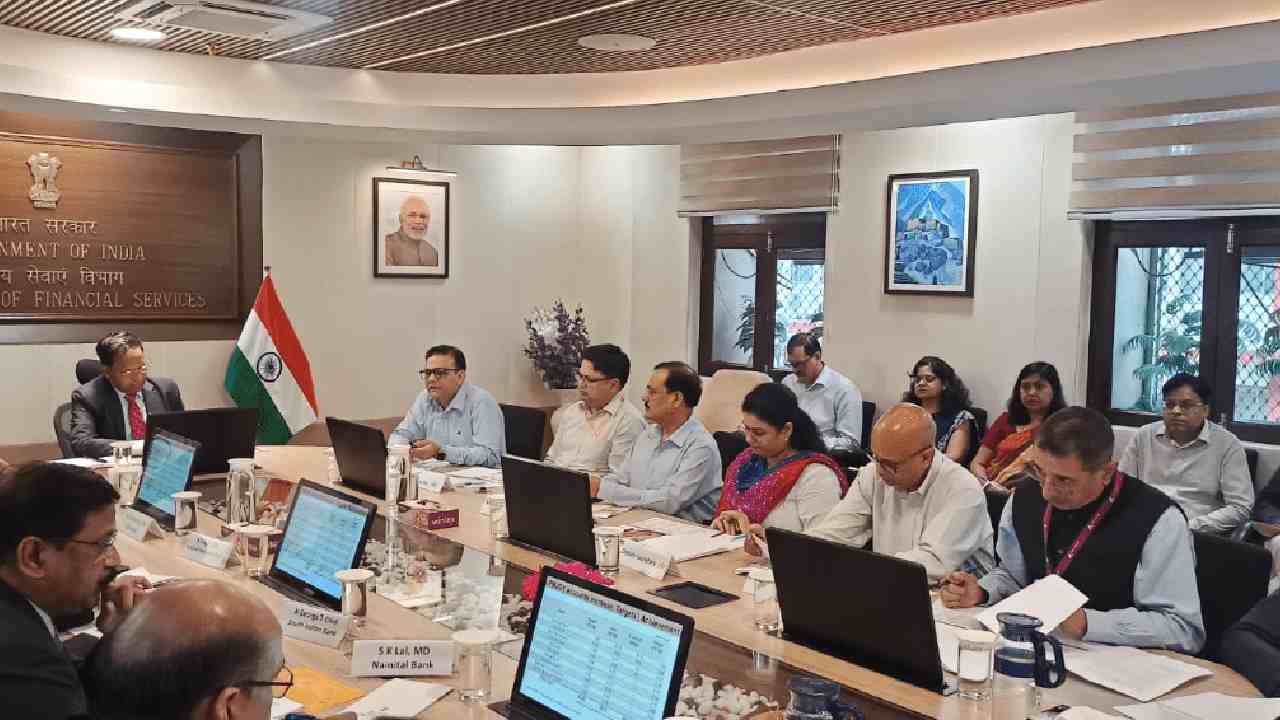
The Indian government has kicked off a big brainstorming session for public sector banks (PSBs) called PSB Manthan 2025. This two-day event (September 12-13), hosted by the Department of Financial Services (DFS), is being seen as a major step toward reshaping India’s banking system.
But what does it mean for ordinary customers, depositors, and the future of our economy? Let’s break it down in simple terms.
What is PSB Manthan?
Think of it like a mega brainstorming camp where the top bosses of government banks, RBI officials, economists, and even private sector leaders like Google and Microsoft come together.
The goal?
To make our public sector banks stronger, more customer-friendly, and ready to compete with global giants.
This year’s focus is on:
- Credit growth (more loans to businesses and people)
- Deposit mobilisation (increasing savings in banks)
- Better customer service
- Digital upgrades & AI-powered banking
- Possible mergers in the future to create bigger banks
Why Now?
India wants to become a $30 trillion economy by 2047 under the Viksit Bharat mission. For that, our banks need to lend more money, support businesses, and expand globally.
Currently:
- Bank credit to the private sector is about 56% of GDP.
- To meet 2047 goals, this needs to go up to 130% of GDP.
That’s a huge leap – and PSBs will play a big role.
Key Highlights of PSB Manthan 2025
1. Boosting Credit Growth
As of June 30, 2025:
- Credit outstanding = ₹183.4 lakh crore
- Growth = 9.9% YoY, down from 18.8% last year
This slowdown is worrying. Especially in sectors like:
- NBFCs (non-banking finance companies) → sharp drop in loan growth
- Services & personal loans → major slowdown
So, the meeting is focused on how PSBs can lend more smartly while keeping risks low.
2. Customer Service – A Big Focus
For the first time, private players like Google, Microsoft, and ServiceNow joined discussions. Why? To help PSBs improve digital services and customer experience.
Some ideas discussed:
- Faster grievance handling
- AI-powered chatbots for banking queries
- Personalized banking using data analytics
- More user-friendly mobile apps
Basically, the government wants PSBs to be as smooth and customer-friendly as private banks.
3. Creating Global-Scale Banks
India currently has only two banks (SBI & HDFC) in the world’s top 100.
- SBI is at 43rd rank by asset size.
The government’s dream:
By 2047, at least 2 PSBs should be in the world’s top 20 banks.
How?
- By scaling up size through organic growth and possible future mergers.
- By adopting cutting-edge technology like AI, cloud banking, and fintech partnerships.
4. Deposits & CASA Challenge
Banks survive on deposits, and right now PSBs are struggling with low CASA (Current Account + Savings Account) ratios.
This means people are either not saving enough in PSBs or moving funds to private banks.
Solution?
- Offer more attractive deposit schemes
- Simplify digital deposit services
- Encourage long-term savings
5. FDI in Banking – The Difference
- In private banks, foreign investors can own up to 74%.
- In public sector banks, FDI is capped at 20%.
This limit means PSBs depend more on government support and local capital. Reforms may explore whether this cap needs relaxation in the future.
6. Focus on Agriculture & MSMEs
Agriculture and small businesses are the backbone of India.
Latest RBI data shows:
- Credit growth to agriculture dropped from 18.1% to 7.3%.
- But MSME loans are rising – up 21% this year.
At the Manthan, leaders discussed how PSBs can give easier loans to farmers and MSMEs to push economic growth.
Why These Reforms Matter for You
- Faster Loans: Easier and quicker approvals for personal, business, and MSME loans.
- Better Service: Improved banking apps, AI-based support, and faster grievance redressal.
- Safer Banks: Bigger, stronger PSBs that can withstand global shocks.
- Global Recognition: Indian banks competing with the likes of JPMorgan, ICBC, and HSBC by 2047.
A Quick Look Back – PSB Consolidation
In 2019, the government merged 10 PSBs into 4, reducing the total from 27 banks to 12.
Examples:
- OBC + United Bank → merged into PNB
- Syndicate Bank → merged with Canara Bank
- Allahabad Bank → merged with Indian Bank
This created larger, more stable banks. The Manthan 2025 may explore if more mergers are needed in the coming decade.
The Road Ahead
The PSB Manthan 2025 is not just another banking meeting. It’s about:
- Preparing Indian banks for the future
- Supporting India’s journey to becoming a $30 trillion economy
- Making sure customers like you and me get better, faster, and safer banking services
The government’s vision is clear – by 2047, Indian banks should not only serve India but also compete at a global level.
Final Thoughts
Public sector banks are the lifeline of India’s economy. With PSB Manthan 2025, the government is trying to rebuild, reform, and reimagine banking for the next two decades.
For customers, this could mean:
- More trust in PSBs
- Better digital services
- Easier loans and savings options
- A banking system ready to face global challenges
If the ideas discussed at PSB Manthan turn into action, India may soon see public sector banks that are world-class in every sense.
Also read-SBI Salary Package Accounts: Types, Benefits, and How to Get One